Caribbean Yacht Charter 2026/27: Season, Costs, Routes and BVI Planning
A winter 2026/27 guide to Caribbean cruising areas, yacht choice and operating costs, with detailed British Virgin Islands planning.
A Caribbean yacht charter can look very different from one island group to the next. The choice is not simply between motor and sailing yachts, or between a seven- and ten-night booking. For 2026/27, begin with the cruising ground rather than a list of beaches. This helps match the yacht to the route and embarkation port.
The British Virgin Islands, or BVI, merit particular attention within the wider Caribbean. They can support a relaxed, island-to-island charter, but the best experience still depends on a realistic sequence of stops, park rules, weather and the captain's judgement. This guide keeps the full Caribbean in view while adding the BVI detail worth settling before a charter agreement is signed.
Choose dates with weather and flexibility in mind
For many guests, the Caribbean winter period from roughly November to April is the natural starting point for a 2026/27 charter. Christmas and New Year, school holidays and a particular yacht's availability can narrow the choices quickly, so the earlier planning conversation should identify the dates that are fixed and the dates that can move. A one- or two-day margin around flights can be valuable when delivery, weather or a late change of embarkation point affects the plan.
The Atlantic hurricane season officially runs from 1 June to 30 November. The Atlantic basin includes the Caribbean Sea, and the National Hurricane Center notes that activity can occur outside those dates; its climatological peak is 10 September, with most activity between mid-August and mid-October.1 That is context, not a forecast for a particular week or island. For travel in or close to that period, ask for the yacht's proposed positioning, the route alternatives, the force-majeure and cancellation clauses, and suitable travel insurance before committing. On charter, the captain's safety assessment and current forecasts take precedence over a wish-list itinerary.
Start with the cruising ground, not the yacht brochure
The Caribbean covers distinct cruising areas. A yacht that suits one of them may not be the best fit elsewhere, particularly where shallow water, longer open-water passages or international clearances shape the day. Put the following questions to the top of the brief: how much time should be spent under way, does the group value sailing or interior volume, are there guests who prefer calmer anchorages, and does the itinerary need a specific restaurant, dive site or island day?
The BVI are a strong candidate for guests who want an island-hopping rhythm with time to swim, dine ashore and return to the yacht without treating every day as a passage day. The Bahamas reward a different conversation: draft, local knowledge and the distances between cays can have a decisive effect on the route. The Leeward Islands can combine French, Dutch and other island experiences, but may introduce more border planning. The Windward Islands can suit groups happy to trade a slower, more ambitious route for longer legs and volcanic scenery.
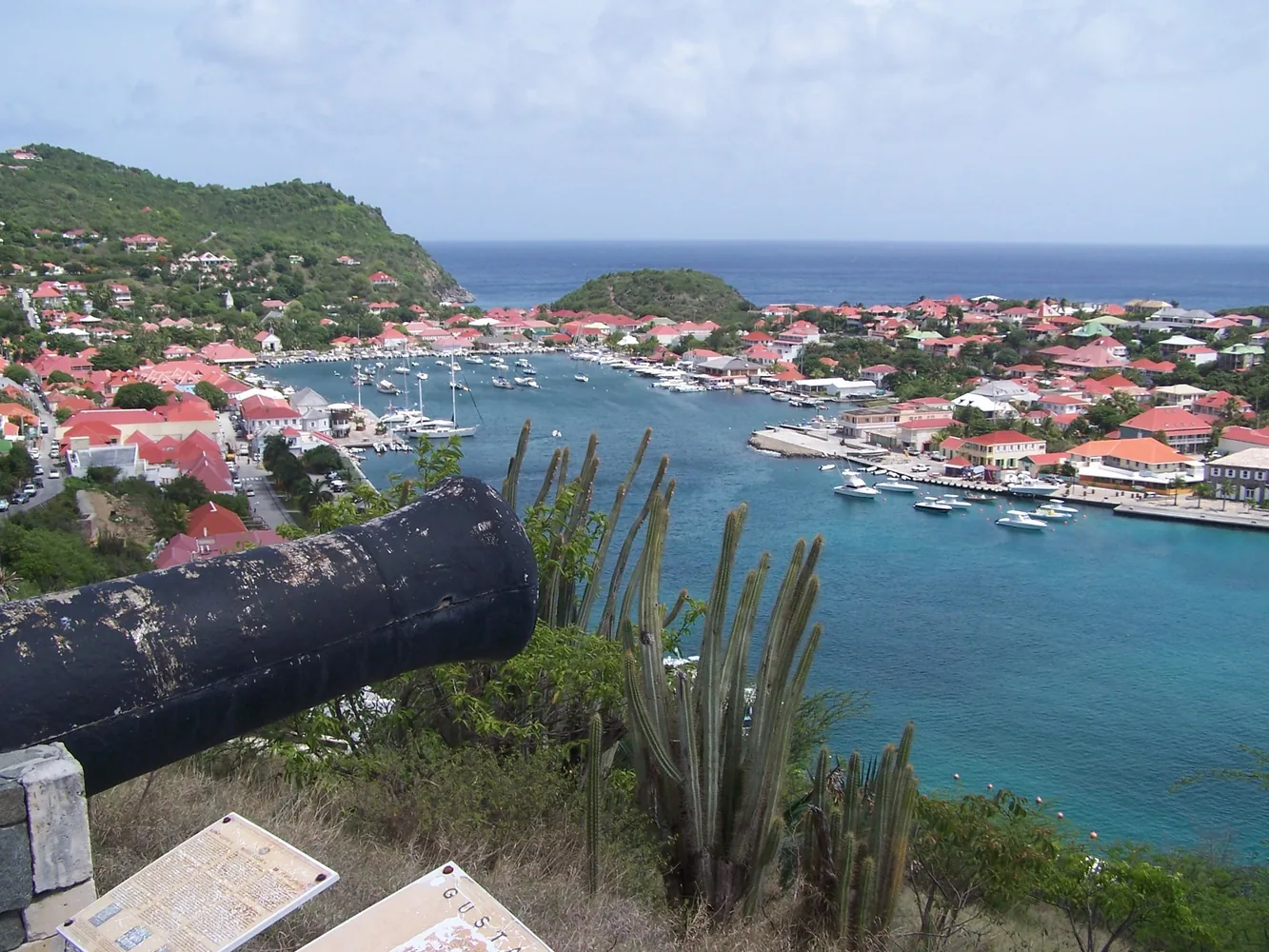
If Gustavia is a principal reason for travelling, use the separate Saint Barth yacht charter guide to plan that island's harbour, guest access and protected waters before finalising a route.
A useful planning rule is to make one cruising ground the centre of the week. Crossing between territories is possible only where the yacht, immigration position, weather and schedule support it. A shorter route with room for a weather change is usually more enjoyable than an over-filled map.
Why build BVI planning into a Caribbean charter
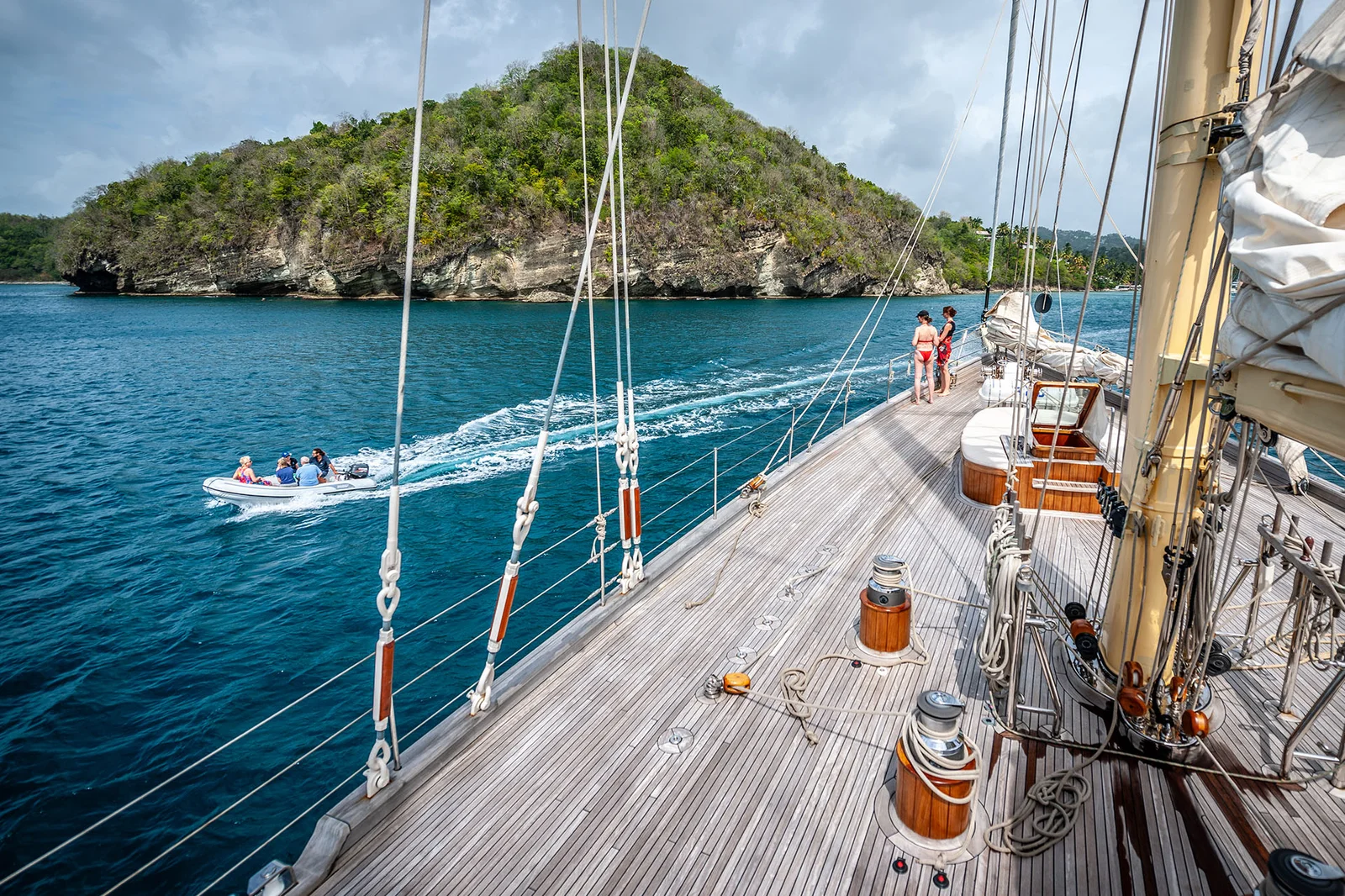
The BVI should be considered a fully developed cruising choice within a wider Caribbean search, rather than a separate add-on to an itinerary that already spans multiple island groups. Tortola, Virgin Gorda, Jost Van Dyke and Anegada each invite a different sort of day, from a shoreside lunch or walk to a snorkelling stop or quiet beach. The BVI Tourist Board describes Anegada as an unusually level coral-and-limestone island, in contrast with the volcanic origin of much of the region, and notes the reefs around it.2 That distinction is a practical cue: let the captain and crew assess whether the yacht, conditions and day plan make Anegada appropriate, rather than promising it in advance.
Virgin Gorda is another example of why a BVI route needs more than a list of names. The Baths National Park has a boulder trail between The Baths and Devil's Bay, while its marine approach has marked channels, a dinghy line and mooring buoys.3 The National Parks Trust warns that strong winter swells can prevent use of those buoys and sea access to the beach. Treat The Baths as a weather-dependent daytime plan, not a guaranteed arrival time. The same principle applies to every popular bay: the captain should confirm conditions, the yacht's practical access and the most responsible place to lie.
The marine environment is part of the itinerary, not a backdrop to it. At the RMS Rhone Marine Park, for example, anchoring and fishing are prohibited; visiting vessels must use the provided mooring buoys and hold a National Parks Trust mooring permit.4 A captain will plan the operational detail, but guests can help by taking the briefing seriously, using designated access arrangements and asking before bringing equipment or arranging an activity with local restrictions.
Shape a BVI week around priorities, not a fixed timetable
A seven-night BVI charter can provide a satisfying circuit if the group limits its non-negotiables. Start with a short list: a day at Virgin Gorda, an unhurried anchorage, a snorkelling or diving priority, a beach or lunch stop, and whether Anegada is a genuine goal or simply a welcome option if conditions line up. Then let the captain order the days according to wind, swell, mooring availability, yacht range and guest energy. The first and final days need particular care because the embarkation and disembarkation port determine how much useful cruising time is available.
For a ten-night charter, retain the same discipline but allow more recovery time. Extra days may be better spent lingering in the BVI, returning to a favourite anchorage or adding a weather buffer than trying to turn the holiday into a multi-country dash. An offshore or cross-border extension should be discussed as a distinct operational choice, with clearance time and the return to the agreed disembarkation port included in the plan.
Build shore wishes in layers. A primary plan might be a park visit, beach time and dinner ashore; a secondary plan might be a different bay, a tender excursion or a longer lunch on board. This gives the crew a useful brief without turning the itinerary into an obligation. It also helps families: a full day of swimming, paddleboarding and an early meal can be as successful as a long passage, depending on the guests.
Avoid booking non-refundable shoreside activities before the captain confirms the likely operating window. Conditions, a change in yacht position and the needs of the whole party can alter the order of stops. Ask for the final itinerary as a living plan, reviewed each day, rather than a guarantee printed weeks beforehand.
Pick the embarkation point before booking flights
A good Caribbean charter begins with a delivery and embarkation check. The starting port should work for the yacht's confirmed position, the intended first night, airport or ferry transfers and any clearance requirements. Only then should flights be fixed. Ask for the actual place and time of delivery and redelivery in writing, plus any delivery or redelivery charges and what happens if an itinerary change is needed.
For the BVI, the official tourism guidance says that vessels entering the Territory must clear with BVI Customs and Immigration immediately on arrival, with valid passports and boat registration papers.5 It lists ports of entry and their operating hours, which can change. If a charter leaves BVI waters, the yacht and crew must complete the correct departure and entry processes for the next territory and clear back into the BVI on return.5 This is especially relevant when a proposed route reaches the US Virgin Islands: an appealing short passage does not remove the immigration and customs work.
Each guest should check entry rules for their own nationality before travel. The BVI Tourism site states that travellers arriving by air or sea must present a passport and that some visitors need a visa.6 For British citizens, the FCDO says an online embarkation card is required and may be completed up to 72 hours before arrival; it also makes clear that BVI authorities set and enforce entry rules.7 The official BVI Customs and Immigration portal says to save or print the completed receipts for presentation on arrival.8 Requirements, carriers' rules and personal circumstances can change, so this is a prompt to check the live official guidance, not immigration advice.
Match yacht type and layout to the route
A route cannot be chosen independently of the yacht. Motor yachts can make more use of available cruising time and often offer generous enclosed volume. Sailing yachts place the sailing experience at the centre of the day and reward a route that does not require constant timed arrivals. Catamarans can offer stable deck spaces and may be especially attractive to groups who will spend much of the day at anchor, but their beam, draft and individual specifications still need checking.
Instead of relying on a headline length, ask to see the actual general arrangement, tender setup and toy list. For a family group, useful questions include cabin adjacency, shade, handrails, access to the water, child-sized safety equipment, tender seating and whether the toys suit the ages and confidence of the guests. For a group of friends, the priorities may be a sociable aft deck, a beach club, a separate lounge, music arrangements and enough cabins with comparable privacy.
For any Caribbean route, confirm draft, stabilisers where fitted, range, tender capability, water-sports restrictions and the number of guests permitted to sleep and cruise. These details affect comfort and access far more than a generic yacht category. The captain retains authority over navigation and safety, so equipment or an itinerary should never be presented as an unconditional promise.
Budget beyond the weekly charter fee
A clear quotation separates the charter fee from expenses and from items that are optional or route-specific. On a charter written on MYBA terms, the charter fee covers the vessel and crew, while the charterer pays other costs at cost, including examples such as fuel, food and beverages, berthing and harbour charges, local taxes, customs formalities, water and shore electricity.9 The exact inclusions always come from the signed agreement and the yacht's offer, not from a rule of thumb.
Where an Advance Provisioning Allowance, or APA, is used, it is a pre-funded working account for those variable expenses. The MYBA agreement requires the captain to keep the charterer informed of expenditure and to produce a detailed account with supporting receipts before disembarkation; any overpayment is repaid and any shortfall settled.10 The percentage or amount is yacht- and agreement-specific, so do not build a 2026/27 budget around a generic APA rate. Request the stated APA, an itemised planning estimate and clarity on taxes, permits, delivery, special provisioning and any watersports or shoreside requests.
Route choice changes the spend. More engine hours, dockage, fuel-intensive tender use, high-cost provisions, cross-border formalities and a change of embarkation port can all affect the account. Ask the broker to show the assumptions behind the estimate and flag the variables that cannot be fixed before the captain has finalised the itinerary. A gratuity, if considered, is discretionary and should not be treated as part of the APA unless the agreement explicitly says otherwise.
Prepare a charter brief that the captain can use
A useful enquiry is specific but leaves space for professional judgement. State the preferred dates, number of guests, cabin needs, overall budget, interest in motor, sail or catamaran, food preferences, mobility or medical considerations, ages of any children and the balance sought between sailing, water sports and shore time. For the BVI, add the stops that matter most and any priorities that are flexible, including whether a potential Anegada day is essential or conditional.
Then compare live options through the yacht search and use the Caribbean charter destination page to frame the wider cruising-ground decision. Before signing, review the named yacht's latest specification, the exact delivery and redelivery terms, cancellation and insurance provisions, the APA wording, taxes and the intended cruising area. For a tailored shortlist or a route discussion, contact the charter team with the details of the group and the travel window.
References
- National Oceanic and Atmospheric Administration, 'Tropical Cyclone Climatology'
- British Virgin Islands Tourist Board, 'Anegada Island'
- National Parks Trust of the Virgin Islands, 'The Baths National Park'
- National Parks Trust of the Virgin Islands, 'Dead Chest National Park & RMS Rhone Marine Park'
- British Virgin Islands Tourist Board, 'Arriving By Sea'
- British Virgin Islands Tourist Board, 'Customs & Immigration'
- UK Government Foreign, Commonwealth & Development Office, 'British Virgin Islands: Entry requirements'
- Government of the Virgin Islands, 'British Virgin Islands Customs and Immigration Portal'
- MYBA, 'Information for Charter Yacht Captains & Crew'
- MYBA, 'MYBA Charter Agreement'
Planning a charter?
Tell us your dates and destination. Our charter team will review your brief and prepare a suitable shortlist.