Saint Barth Yacht Charter Guide: Gustavia, Itineraries, Access and Planning
Plan guest arrivals, Gustavia, protected waters and a realistic St Barth itinerary without assuming berth or yacht availability.
Saint Barthélemy, usually called St Barth, needs an island-specific plan. A day at anchor can depend on yacht dimensions and conditions as much as on the desired beach. The aim is not to fit every celebrated stop into one week. It is to leave room for Gustavia, unhurried swimming and the captain’s weather-led decisions.
Gustavia is the capital and the centre of island life, where the harbour, narrow streets, restaurants, galleries and Swedish-era viewpoints sit close together.1 That closeness is part of St Barth’s appeal, but it also makes realistic arrival, tender and shore-time planning more important. Use this guide as a decision framework, then have the yacht’s representative and captain confirm what is practical for the exact yacht, dates and prevailing conditions.
Why St Barth needs its own charter plan
A St Barth week can be an elegant standalone charter, a focused section of a wider Leeward Islands route, or a few days incorporated around a special occasion. In each case, the island works best when the group agrees what it wants most from the time: harbour life and dinners ashore, quiet daytime swimming, a sociable event period, or a balance of all three. That priority determines how many overnight changes are worthwhile.
Gustavia is not simply a backdrop for an anchorage. The official tourism guide describes a capital shaped by its harbour, with shops, restaurants and places to stroll, while Fort Gustav and Fort Karl offer views across the bay.1 It can therefore justify an evening ashore or a deliberately slower first day. By contrast, Colombier is a nature-led stop whose beach is accessible by sea or hiking trail.2 The contrast is the useful organising principle: give the itinerary a town-facing moment and a quieter coastal moment, rather than treating every bay as interchangeable.
The island’s marine rules are central to that distinction. The Territorial Environment Agency states that its Marine Park covers five zones and protects fragile seagrass and coral ecosystems.3 It also regulates pleasure boating. A preferred bay is therefore a request to assess, not a right to anchor, moor or run water toys. Build the route around permitted uses and allow the captain to substitute a suitable alternative if conditions or regulations require it.
Guest access and embarkation planning
There are no direct long-haul flights to St Barthélemy. The official tourism guide says most travellers arrive via Saint Martin, Guadeloupe, Antigua or Puerto Rico, then continue by short regional flight or ferry.4 That last connection is not a minor detail when guests are joining a yacht. Leave a sensible buffer between long-haul arrival and embarkation for luggage, immigration, weather disruption and schedules.
Passport and visa requirements are personal to the traveller. Saint Barth Tourism says a valid passport is required and that a French visa may be required depending on nationality; it advises checking the rules applicable to the individual journey before travel.4 Guests transiting through another territory must also satisfy that territory’s requirements. Do not rely on a previous Caribbean trip, a booking platform summary or another guest’s nationality as a substitute for checking current official information.
The yacht’s intended pickup point should be confirmed before flights are finalised. A plan may involve boarding in Gustavia, arriving by tender from a nominated meeting point, or joining after the yacht has completed formalities. Share flight numbers, luggage profile, mobility needs and a reachable travel-day contact with the operational team. That lets the crew assess tender suitability and timing, without promising a particular pickup arrangement before weather, port instructions and the yacht’s position are known.
For guests who prefer the sea crossing, official tourism information lists ferry links from Saint Martin and Sint Maarten to Gustavia, while warning implicitly through its published operators that timetables are a live travel detail.4 Check the operator directly close to departure. A ferry can be a useful option, but it should not be treated as a fixed transfer guarantee for a yacht itinerary.
Gustavia harbour: plan the operation, then enjoy the town
The Port of Gustavia consists of a marina and commercial port, and its pleasure-port information directs yachts to online clearance facilities and the harbour office.5 Entry and exit formalities are mandatory for access to the marina. The port says they may be completed at the office or online up to 24 hours in advance, but that the document must then be printed and signed at the port office.6 These are crew and yacht-management tasks, yet guests benefit from understanding why the first or last hour of a stay may not be freely movable.
Check current port guidance immediately before arrival. The port homepage displays a 3-knot channel limit, while the environmental authority says vessels should use the access channel, call the harbour master on VHF Channel 12 before manoeuvring, and keep to 5 knots in the port area.5 7 The crew should follow current harbour-master directions. A published procedure does not reserve a berth, mooring or place at anchor.
Once ashore, Gustavia is compact enough for the yacht to frame rather than dominate the evening. Start with a harbourfront walk, then choose a restaurant or an informal drink without building the day around a tightly timed return. Shell Beach and the viewpoints at Fort Gustav and Fort Karl are all noted by the official tourism guide as nearby ways to vary the experience.1 Restaurant reservations, tender timing and any local transport should be treated as advance-planning items in busy periods, not assumptions made after guests have landed.
A flexible seven-day St Barth framework
A successful St Barth itinerary is a sequence of choices, not a promise of seven fixed overnight locations. The following framework gives each part of the island a role and deliberately leaves space for a weather or operational change.
Day one: arrive gently in Gustavia. Keep the first afternoon for boarding, safety familiarisation and the practical rhythm of the yacht. If the timing permits, make the evening about the harbour town rather than a long passage. It gives late-arriving guests a proper start without asking the crew to compress operational work.
Day two: Colombier, subject to yacht eligibility. Colombier is an obvious quiet-water aspiration because of its beach and coastal setting, but it has material restrictions. The Environmental Agency says vessels over 25 metres are not authorised in Colombier Bay. It also states that a vessel using ecological moorings or an authorised anchoring area must meet stated size and time limits, including a maximum 96-hour stay, with further insurance requirements.3 Treat Colombier as a conditional day stop to be checked by the captain, not as an automatic overnight. Snorkelling and swimming can be the point of the day if the location and conditions are suitable.
Day three: a lagoon-focused pause. Grand Cul-de-Sac offers a change from the harbour and open coastal bays, but the Environmental Agency states that specific rules apply in the lagoon.3 Ask the captain to identify what is permitted for the yacht, tender and planned activities on the day. The value here is the slower pace: breakfast on board, a managed swim or tender outing where allowed, and time to enjoy the landscape rather than add mileage for its own sake.
Day four: return to Gustavia for an island evening. A harbour call in the middle of the week gives guests a chance to revisit a favourite restaurant, explore the streets in daylight or go to the forts without the pressure of departure day. It also reduces the risk of an itinerary that treats shore life as an afterthought.
Day five: Fourchue only if it works. Fourchue, like Colombier, lies in a simple-protection zone. The agency says vessels over 25 metres are not authorised in either bay and applies the same 96-hour and insurance conditions to qualifying stays.3 For an eligible yacht, it may provide a useful nature-led contrast. For another yacht, it is simply a reason to choose a lawful alternative. This is precisely why yacht size, local rules and captain input belong in the brief before the itinerary is sold to guests.
Day six: reserve it for conditions and preferences. Use this day to repeat the bay that worked best, schedule a watersports session only where permitted, or make the most of a calm window. Around St Barth, anchoring outside the Marine Park still needs care: the agency points boaters to the DONIA seabed map to avoid reefs and seagrass, and identifies areas where anchoring is prohibited or regulated.7
Day seven: make the exit calm. Return to the agreed departure arrangement with enough time for packing, tender transfer and yacht formalities. Avoid putting the week’s only essential shore reservation or the longest coastal run immediately before a fixed guest flight.
Timing, weather and event dates
Timing is about conditions and the desired atmosphere, not merely a label such as high or low season. For any intended dates, ask for a current marine forecast and a captain’s view of the likely passage plan. Météo-France provides Saint-Barthélemy forecasts, vigilance information, marine weather and cyclone monitoring for the region.8 These live sources matter more to a charter than an historic weather average.
The Atlantic hurricane season officially runs from 1 June to 30 November. NOAA notes that activity can occur outside those dates and that its historical peak is 10 September, with most activity between mid-August and mid-October.9 This is not a forecast for a particular trip. It is a reason to build flexibility into routing, flights and shore arrangements during that period, and to understand the agreement’s weather and cancellation provisions before committing.
For guests considering a March event week, the St Barths Bucket organiser has published 17 to 21 March 2027 as the 2027 event dates, with racing scheduled from 18 to 21 March.10 The organiser also reserves the right to modify its schedule for weather or unforeseen circumstances.10 Book around the event only if the group wants its onshore and harbour energy, and start operational checks early. The dates do not imply that a yacht, a berth, a mooring or a restaurant reservation will be available.
Cost planning: use factors, not a headline number
A useful St Barth budget separates the charter fee from the voyage costs that follow the itinerary. Under the published MYBA Charter Agreement, the charter fee includes the vessel, crew wages and food, insurance and certain basic onboard items. Other expenses are payable at cost and may include fuel, food and drinks for guests, harbour charges, local taxes, shore water and electricity, agent costs, transport, communications and requested special equipment.11
The practical cost drivers are therefore the shape of the week. More cruising can mean more fuel use. A harbour-heavy plan can create different charges from time at anchor. Guest preferences for dining ashore, specialist provisions, transfers, excursions and particular water activities can all change the cash requirement. Taxes and local charges depend on the itinerary and applicable rules. None should be replaced with a generic percentage or a headline rate that is not attached to the proposed yacht and agreement.
Where an Advance Provisioning Allowance is used, the MYBA agreement says the captain should report disbursements at intervals and present a detailed account with supporting receipts before disembarkation. Any deficit is paid and any overpayment repaid.11 Ask for a written explanation of the proposed allowance, what it is intended to cover, the currency, which costs are estimates and which are already known. This is more useful than trying to predict St Barth spend from a previous charter elsewhere.
Turn the idea into a workable brief
Start with the charter search to understand current yacht types, layouts and date possibilities. Then use the Caribbean yacht charter destination guide for the wider regional context, while keeping the St Barth question specific: how does this yacht, in this position, suit the island’s rules, guest arrivals and desired balance of town time and protected-water stops?
A strong enquiry includes a date range, number of guests and cabin priorities, flight gateways and target arrival time, the importance of Gustavia evenings, appetite for tender transfers, watersports expectations, dietary or accessibility information, and whether the group is travelling for the 2027 Bucket or another dated event. Ask which parts of the outline are confirmed, which are conditional and what needs a port or captain check. That distinction is more valuable than a glossy itinerary.
For a tailored discussion, contact the charter team with those details. Until a particular yacht, dates, position and operational plan are confirmed in writing, regard every itinerary as an informed starting point rather than a guarantee of access, berth, anchorage or availability.
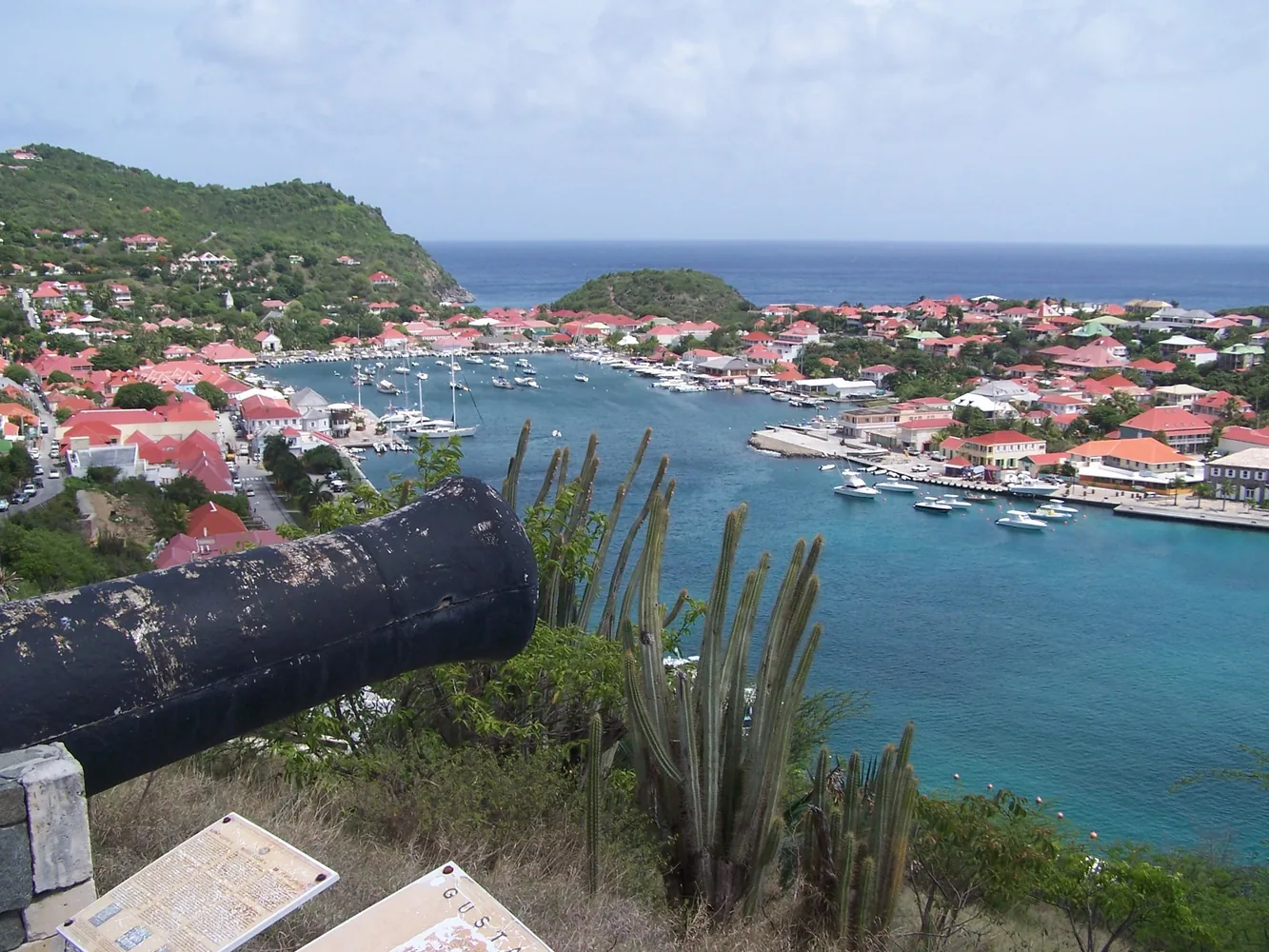
Cover photograph: Kevin Gabbert / Kevin James, public domain. Gustavia harbour photographed in 2007; image resized and re-encoded.
References
- Saint Barth Tourism: Gustavia
- Saint Barth Tourism: Colombier
- Territorial Environment Agency: Regulatory zones in Saint Barthélemy Marine Park
- Saint Barth Tourism: Travel and entry information
- Port de Gustavia: Official port homepage
- Port de Gustavia: Marina entry and exit formalities
- Territorial Environment Agency: On the water guidance
- Météo-France: Saint-Barthélemy forecasts, vigilance and marine information
- NOAA National Hurricane Center: Tropical Cyclone Climatology
- St Barths Bucket: 2027 preliminary schedule of events
- MYBA Charter Agreement: Clause 8 operating costs
Planning a charter?
Tell us your dates and destination. Our charter team will review your brief and prepare a suitable shortlist.