Mediterranean Yacht Charter Guide: Regions, Seasons and Route Planning
Choose a Mediterranean cruising region and a realistic seasonal route before matching yacht, berth and guest programme.
A Mediterranean yacht charter spans distinct coastlines: Riviera port life, Balearic beach days, Italian island scenery, Greek crossings, Croatia’s Adriatic geography or Türkiye’s cove-led cruising. The best route suits the group’s pace, shelter, shore plans and travel logistics.
This is a broad planning guide, not a fixed itinerary. The final route depends on the yacht, current local rules, weather, berth availability and the captain’s judgement. MYBA guidance asks charter professionals to consider the guest brief, weather, distances, local regulations and berth constraints before offering an itinerary.1
Start with the kind of week you want
Choose the experience before choosing the coastline. A group focused on restaurants, towns, galleries, shopping or a fixed shoreside occasion needs deliberate port nights and realistic tender timings. A group focused on swimming, long lunches and privacy may prefer fewer miles, sheltered anchorages and easy water access.
Four questions narrow the map quickly:
- Do you want animated ports, quiet anchorages or a balance of both?
- Is the priority famous places, or time to explore a smaller area well?
- Are there fixed moments, such as a dinner, transfer or celebration, that require a particular berth or town?
- How much time under way will feel enjoyable for the group?
These answers affect the yacht as well as the route. Families may value shade, simple water entry and short transfers. Friends may care more about equally appealing cabins and social deck space. Mobility needs, dietary requirements and essential water toys should be included in the initial brief.
Treat a sample itinerary as an illustration, not a promise. Keep the list of immovable stops short, then ask for a preferred route and a sheltered alternative. That creates room for sound decisions without turning a weather change into a disappointment.
Choose a Mediterranean region by character
The French Riviera suits a port-led week of short movements, dining and shore time. Nice Côte d’Azur’s official visitor information reflects the blend of coastal activity, culture, beaches and events.2 If dates are tied to an event, restaurant or harbour, treat the berth as a separate confirmation. Port Vauban, for example, uses a booking request process and describes its estimates as non-contractual.3
The Balearics combine beaches, coves, port evenings and open-water passages. Ibiza and Formentera suit a sociable shore programme, while Mallorca and Menorca can offer a different harbour-and-anchorage balance. Environmental restrictions are a material route-planning factor: the Balearic Government states that anchoring on Posidonia oceanica is generally prohibited and that, in specified regulated fields, skippers must use designated buoys.4
Sardinia and Corsica suit a water-centred rhythm of clear bays, granite coasts and selected port stops. A week is usually better spent on one focused area, such as the Costa Smeralda and La Maddalena or southern Corsica, than on a comprehensive Sardinia-and-Corsica circuit. The Strait of Bonifacio can be memorable, but it should remain a forecast-dependent decision rather than a passage needed to complete the map.
The Amalfi Coast and nearby islands are visually concentrated, yet the days can become shore-access heavy. Capri, Sorrento, Positano and Amalfi are close enough to tempt an overfilled plan. Leave room for tender movements, time ashore and the possibility that swell or harbour conditions make one landing less attractive than another. A smaller number of shore priorities will usually feel better than a speed-run of landmarks.
Greece deserves a choice of island group rather than a generic island-hopping plan. An Athens and Cyclades route can combine distinctive islands with exposed crossings and a need to respond to wind. A western Greece or Ionian plan has different geography and pace. Start from the preferred embarkation point and do not assume that famous islands belong in the same seven-night charter. Greece’s Hellenic National Meteorological Service issues marine forecasts for the Eastern Mediterranean and Black Sea, but the forecast and captain’s interpretation for the yacht’s actual area are what matter on the day.5 For yacht choices and an island-group brief, see the Greece charter page.
Croatia and Montenegro reward focus too. Choose a sensible corridor and start-finish pair rather than treating Split and Dubrovnik as automatic endpoints of the same short charter. Protected-area rules can be specific: Kornati National Park permits anchoring and overnighting only in its listed bays and coves, while strict-protection zones are closed to visitors.6 Montenegro can work as a compact destination or part of a longer Adriatic route, but a border crossing needs separate checks for timing, documentation, clearance and yacht permissions.
Türkiye’s Aegean and Mediterranean coast is compelling for an anchorage-led week around Bodrum, Marmaris, Göcek, Fethiye, Kaş or Kekova. GoTürkiye describes the Blue Voyage as a sea holiday on the country’s Aegean or Mediterranean coasts, with the route chosen after the boat is selected.7 That is a useful order anywhere: choose a feasible area for the yacht and dates, then refine the stops.
To compare suitable vessels across regions, search Mediterranean charter yachts. For a destination-led starting point, see the Ibiza charter page, Sardinia charter page or Croatia charter page.
Match the season to your priorities
The core planning period is broadly late spring through early autumn. Do not choose dates from temperature averages alone: water temperature, daylight, marina activity, seasonal openings, wind, sea state and itinerary flexibility all matter.
| Period | General planning strengths | Questions to ask |
|---|---|---|
| May to early June | More routing latitude and comfortable sightseeing conditions | Are preferred restaurants, beach clubs or seasonal services open on the exact dates? |
| Late June to August | Warm-weather atmosphere, late daylight and the fullest destination calendar | Which berth and dinner plans are fixed, and what is the alternative if they cannot be confirmed? |
| September | Often a strong balance of warm sea, shore life and a less compressed feel | How will the route respond if an autumn weather system changes the plan? |
| October | Quieter coastlines where the yacht and local operating pattern allow it | Are embarkation services, harbour hours and onshore plans confirmed for the dates? |
Peak summer does not mean poor cruising, and shoulder periods do not guarantee empty ports. In a fixed-date peak week, reduce the number of non-negotiable stops and secure only the port nights that genuinely matter. Outside high summer, avoid assuming that every venue, buoy field or service will operate in the same way.
Weather must remain a live input. The World Meteorological Organization’s WWMIWS service displays marine forecasts and warnings provided to mariners through SafetyNET and NAVTEX within the GMDSS framework.8 The crew will use the relevant official forecasts, notices and onboard information for the actual voyage. A route may need to be re-ordered, shortened or moved to better shelter.
Build a route that works on the water
Embarkation and disembarkation are part of the route. Confirm the boarding window, transfer time, first-night plan and final port early. A late flight may favour an evening alongside; an early return may make a remote final anchorage less useful.
For a seven-night charter, protect the first and last day for provisioning, briefing, luggage and transfers. One principal move a day, with a nearby alternative, is more robust than an exact timetable and leaves time for swimming, lunch or an hour ashore.
Use this simple routing approach:
- Select one regional corridor, rather than trying to cover a whole country or island group.
- Name two or three true priorities, such as a historic town, a restaurant evening and a full day at anchor.
- Put the fixed port night where it is operationally useful, not merely where it looks best in sequence.
- Add a sheltered Plan B for each exposed or timing-sensitive day.
- Discuss night cruising explicitly if it matters. Do not presume it will make an ambitious map fit.
A one-way itinerary can be excellent, but it is not simply a prettier loop. Confirm the redelivery port, the yacht’s ability to be there after the charter, possible delivery or redelivery costs, and implications of crossing a border. MYBA’s broker guidance notes limited berths in many locations, the potential use of agents and the need to explain related costs.1
Use ports and anchorages for different jobs
A port night is worth prioritising when it unlocks a restaurant reservation, town evening, guest transfers, easy shoreside access or a reliable departure point. The trade-off is that a berth may be constrained by yacht dimensions, harbour rules, arrival time and availability. A request is not a booking until the appropriate port, marina or agent confirms it.
An anchorage is not a free-form substitute for a marina. It needs safe shelter, suitable depth and holding, legal permission, room for the yacht and a workable tender route. Swell can make a landing or dinner return unpleasant even when the sky is clear. The crew chooses the best anchorage on the day, based on local conditions and guest comfort.
Use port nights for shore access and certainty; use anchorages for slower water-based days. Ask how the tender will be used, whether easy boarding matters, and what the backup is if a preferred landing is uncomfortable.
Plan responsibly around protected waters
Posidonia oceanica is a Mediterranean seagrass, not seaweed, and its protection can change an anchorage plan. In the Balearics, official guidance identifies regulated fields and directs skippers to designated low-impact moorings in specified areas.4 The regional government also provides Posidonia mapping tools.9 These help with planning, but do not replace current navigation data, local instructions or the captain’s assessment.
French Mediterranean rules also restrict anchoring in defined areas to protect Posidonia and improve safety. The Maritime Prefecture explains that prohibited anchoring zones are shown on the relevant SHOM charts and encourages local low-impact alternatives.10 Similar principles apply elsewhere, though the permit and enforcement process is local.
Do not ask the crew to anchor over a visible meadow or disregard a restriction for a closer swim stop. Accept a legal buoy or a different bay when necessary. National-park access, marine protected areas, speed rules, diving, personal watercraft use and borders need a current, place-specific check.
Understand what the route can change in the budget
The advertised charter fee is not necessarily the whole cost. The MYBA Charter Agreement covers the vessel, crew and specified onboard items, while operating expenses can include fuel, food and drinks, berths, harbour charges, taxes, shore transport, communications and requested equipment.11 The signed agreement controls what is included.
An Advance Provisioning Allowance, or APA, is commonly used as an advance fund. Under the MYBA agreement, the captain accounts for expenditure, may request more funds if needed and presents an end-of-charter account; any overpayment is returned through that process.11 Do not rely on a generic percentage: spend depends on the yacht, area, route, tax treatment and guest choices.
Longer passages, higher speeds, generator use, tender use, water toys, premium berths, specialist provisioning and shore excursions can change the total. Request a yacht-specific estimate separating the base charter fee, operating fund, taxes, delivery or redelivery where applicable, and known special items.
Let the captain make the final operational call
A strong itinerary is flexible by design. Under the published MYBA Charter Agreement, the captain follows reasonable guest orders only when wind, weather and other circumstances allow, and need not comply with an instruction that would lead to an unsafe or improper port, interfere with redelivery or breach the agreement.12 The same agreement gives the captain authority to exclude unsafe or irresponsible use of watersports equipment.12
That authority enables the crew to preserve comfort and safety when conditions change. Agree priorities before departure, state which shore plans are truly fixed, and let the captain sequence the route around the actual sea state. A reordered day, different anchorage or cancelled tender landing can be the mark of good seamanship, not a failed plan.
Before requesting yachts, send dates, guest numbers, cabin requirements, budget range, preferred region, desired pace, non-negotiable moments, dietary or mobility needs and important water toys. Then contact the charter team with that concise brief. The best Mediterranean itinerary leaves enough room for the yacht, crew, sea and guests to enjoy it.
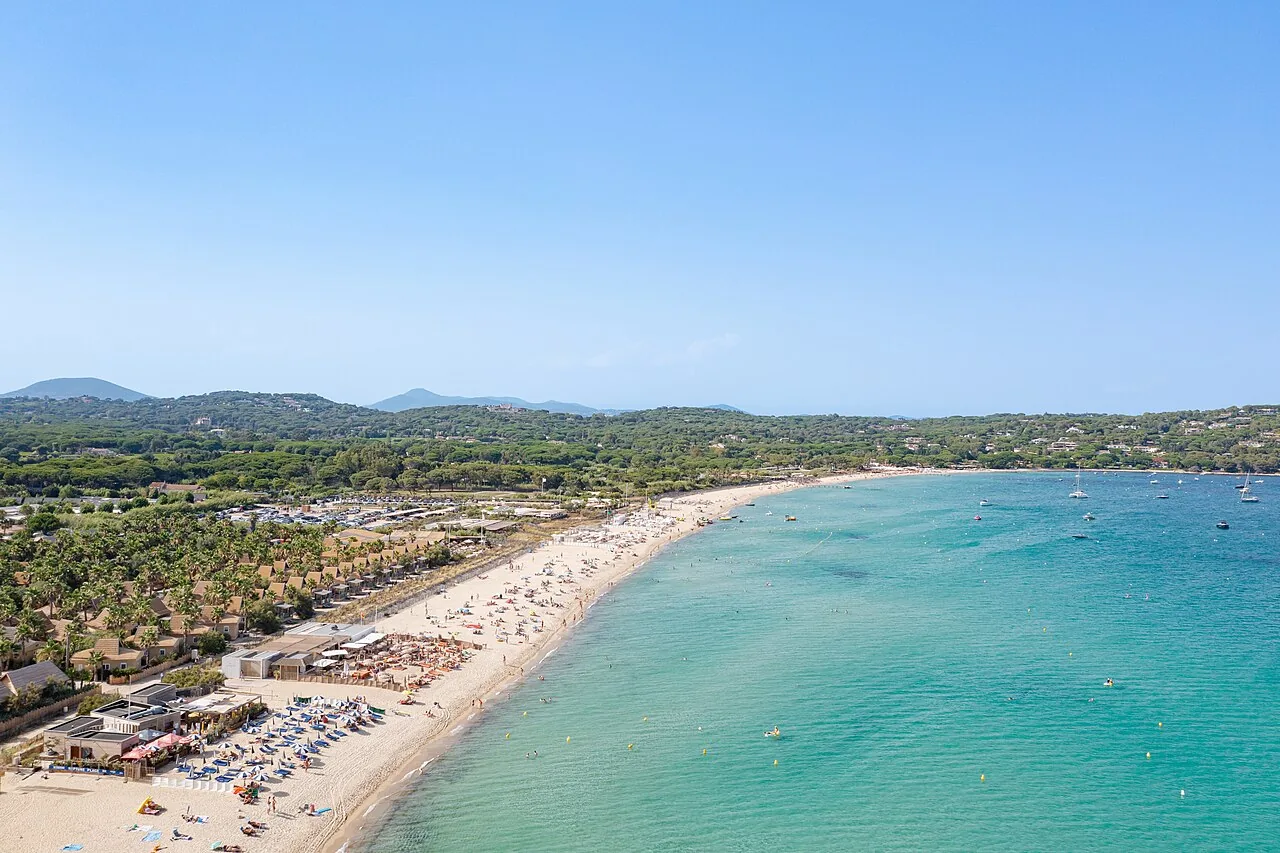
Cover photograph: dronepicr, CC BY 2.0. Pampelonne Beach and the French Riviera; image resized and re-encoded.
References
- MYBA Charter Committee, ‘Guidelines for Retail Charter Brokers and Charter Managers’
- Nice Côte d’Azur Tourist Office, ‘Nice Côte d’Azur’
- Port Vauban, ‘Short-term berthing’
- Govern de les Illes Balears, ‘Information for Navigators on Rules Applicable in Regulated Buoy Fields’
- Hellenic National Meteorological Service, ‘Greece Weather’
- Kornati National Park, ‘Rules of Conduct’
- GoTürkiye, ‘Experience Türkiye’s Stunning Coasts on the Legendary Blue Voyage’
- World Meteorological Organization, ‘Worldwide Met-Ocean Information and Warning Service’
- Govern de les Illes Balears, ‘Posidonia Cartography’
- Préfecture maritime de la Méditerranée, ‘New Mediterranean Anchoring Regulation to Protect Posidonia and Strengthen Maritime Safety’
- MYBA, ‘Charter Agreement: Operating Costs and APA’
- MYBA, ‘Charter Agreement: Captain’s Authority and Responsibilities’
Planning a charter?
Tell us your dates and destination. Our charter team will review your brief and prepare a suitable shortlist.