Ibiza Yacht Charter: The Complete Guide to Anchorages, Routes and When to Go
Ibiza is one of the most requested charter destinations in the Mediterranean. It's also one of the most misunderstood. Here's what a week on the water actually looks like.
Ibiza is one of the most requested charter destinations in the Mediterranean. It's also one of the most misunderstood. The island has a reputation built on its nightlife, but the water around it, and the neighbouring island of Formentera is some of the clearest in Europe. A week on a yacht here looks nothing like a week in a hotel, and the experience available to charter clients bears almost no resemblance to what most people associate with the name Ibiza.
MY OCEAN has arranged charters in the Balearics for years. This guide is based on what we've learned from those bookings. Not from a brochure. We'll cover the anchorages that consistently deliver, the ones that disappoint, when to go, what to budget, and what a practical week on the water actually looks like.
When to Go
June and September are the right months for most clients. July and August are peak season: the anchorages are crowded, the marinas are full, and prices reflect both. The water is warmer in August, but the trade-off in terms of space and atmosphere is significant.
June offers warm weather, long days, and anchorages that still have room to breathe. The sea temperature in June is typically 22–24°C. Warm enough for swimming but not the 27–28°C of August. The light in June is exceptional: long golden evenings, clear skies, and the kind of visibility that makes the water around Formentera look like the Caribbean.
September is arguably the best month of the Balearic season. The crowds thin out from the second week onwards, the water temperature is at its peak from the summer's accumulated heat, and the anchorages that were impossible in August become accessible again. Prices drop 15–25% from peak season rates. If your priority is the experience rather than the social calendar, September is the answer.
October is possible but increasingly unpredictable. The weather is still warm, the water is still swimmable, and the marinas are quiet. But the risk of a mistral or tramontana wind event increases, and some of the best anchorages become exposed. If you're considering October, choose a vessel with a larger engine and a captain who knows the Balearics well.
The Anchorages
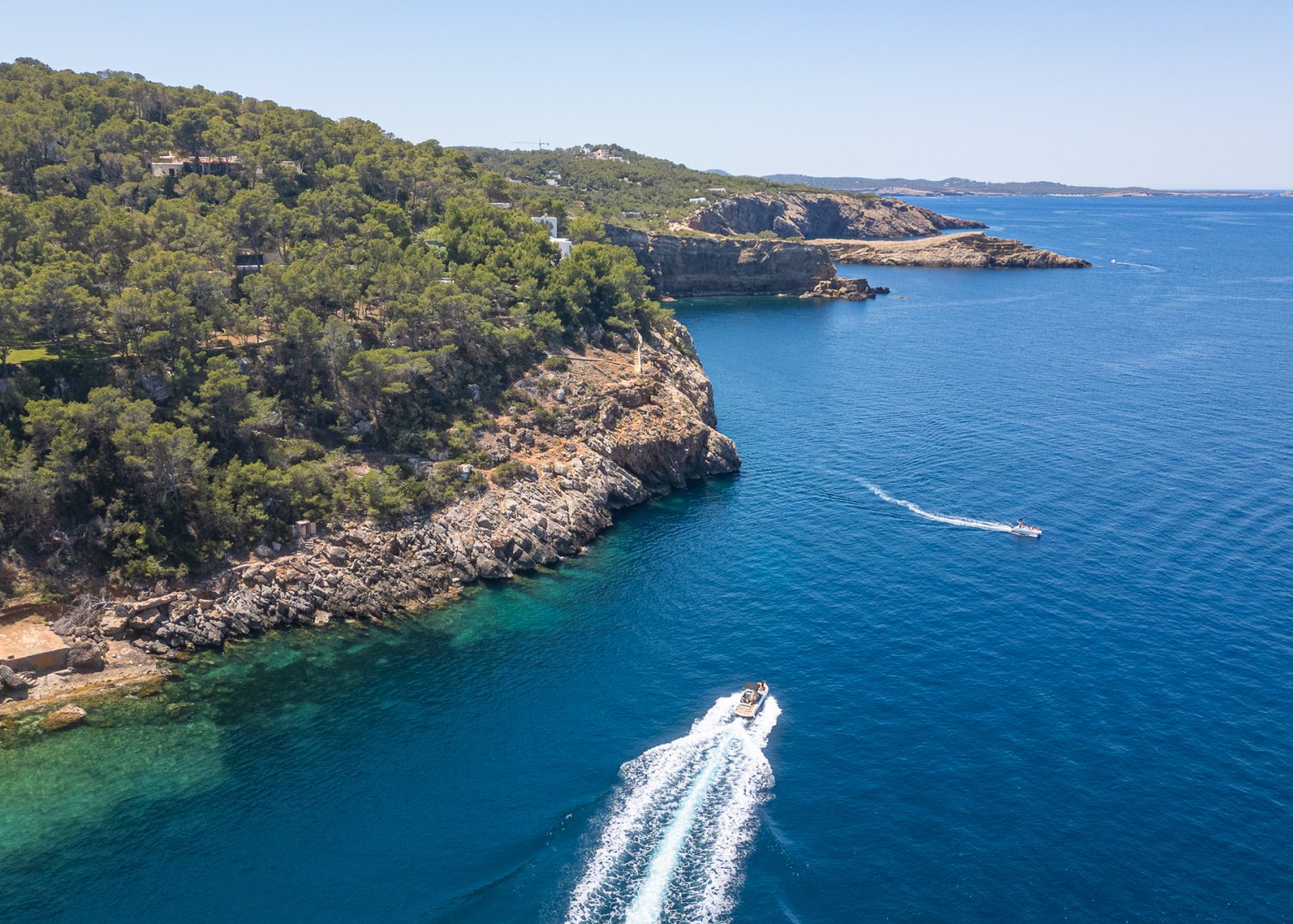
Cala Saladeta is the one anchorage on the island that consistently delivers. Small, protected, with water that's genuinely turquoise rather than the blue-green you find elsewhere. The seabed is sandy and the holding is good. It gets busy in August, but in June or September you can anchor with space around you. The walk up to the viewpoint above the cala takes twenty minutes and is worth it for the view back toward the bay.
Formentera is the reason many clients extend their charter by two or three days. The island sits twenty minutes by tender from Ibiza's southern coast, and the water around Ses Illetes beach is the clearest in the Balearics. Visibility of 30 metres or more in calm conditions. The sandbar between Ses Illetes and Espalmador is shallow enough to wade across at low tide. The beach bar at Ses Illetes serves good food and cold drinks. The pace of life on Formentera is genuinely different from Ibiza, quieter, slower, and more focused on the water.
Cala d'Hort faces Es Vedrà, the 400-metre rock that rises out of the sea on Ibiza's southwest coast. It's not the most sheltered anchorage. There's a slight swell in most conditions. but the view is worth the roll. Arrive before midday in peak season to get a position with a clear line of sight to the rock. The sunset from Cala d'Hort, with Es Vedrà silhouetted against the sky, is one of the best views in the Mediterranean.
Tagomago Island, off Ibiza's northeast coast, is private and therefore quiet. The anchorage on the western side is well protected from the prevailing winds and the snorkelling around the rocks is good. The island has a lighthouse and a small beach. It's the right choice if you want a full day away from other boats.
Cala Xarraca, on the north coast, is a wide, sheltered bay with clear water and a small beach bar. It's less well-known than the southern anchorages and therefore less crowded. The drive from Ibiza Town to the north coast takes forty minutes, most charter clients never make it this far, which is exactly why it's worth going.
Espalmador, the small island between Formentera and Ibiza, has a natural lagoon on its northern side that's one of the most beautiful anchorages in the Balearics. The water is shallow and warm, the holding is good, and the island is uninhabited. It's accessible only by tender or shallow-draft vessel. The lagoon is at its best in the morning before the day-trip boats arrive.
What to Avoid
Ibiza Town harbour is not a pleasant place to spend the night on a yacht in July or August. The noise from the clubs and bars carries across the water until 4am. If you want to visit the old town, anchor off the coast and take the tender in for the evening. Return to a quieter anchorage for the night.
The anchorage at Playa d'en Bossa is similarly compromised in peak season. The beach is fine, but the proximity to the airport and the clubs means it's not a place for a quiet morning. The anchorage at Cala Bassa is popular but gets extremely crowded in July and August. Arrive before 9am or don't bother.
The marinas in Ibiza Town and Santa Eulalia are functional but not particularly pleasant. If you need to be in a marina for a night, Santa Eulalia is quieter and better run. Marina Ibiza in the old port is convenient for the old town but noisy.
A Practical Week
A seven-night charter that starts and ends in Ibiza Town marina might look like this. Day one: sail south to Formentera and anchor off Ses Illetes. Swim, lunch on board, explore the sandbar in the afternoon. Day two: move to the quieter eastern side of Formentera for the night. The anchorage off the lighthouse is calm and beautiful. Day three: return to Ibiza and anchor at Cala Saladeta for the afternoon. Day four: move north to Tagomago Island. Day five: sail around the north of the island and anchor at Cala Xarraca. Day six: head south and stop at Cala d'Hort for the Es Vedrà sunset before returning to Ibiza Town for the final night. Day seven: departure.
This itinerary works on a motor yacht of 20 metres or above. On a sailing yacht, the same route takes longer and the experience is different. Slower, quieter, more dependent on the wind. Both are valid. The right choice depends on what you're actually looking for from the week.
What It Costs
A week on a 25-metre motor yacht in the Balearics in June costs approximately €20,000–€35,000 in charter fees, plus APA (30–35% of the charter fee) and crew gratuity (10–15%). A realistic total for a week on a well-equipped 25-metre vessel in June is €30,000–€50,000. In July or August, the same vessel costs 20–30% more.
The Balearics require a transit log for foreign-flagged vessels. Your broker handles this before departure. Marina fees in Ibiza Town in peak season run €300–€600 per night for a 25-metre vessel. Anchor out where possible. It's free, quieter, and better.
Ready to plan a Balearics charter? View our current charter fleet or speak to Emily directly about availability and yacht recommendations for the Ibiza season.
Planning a charter?
Tell us your dates and destination. Our charter team will review your brief and prepare a suitable shortlist.