Bahamas Yacht Charter Guide: The Exumas, Routes and Planning
A practical Exumas planning guide for a crewed yacht charter, covering route shape, protected waters, yacht fit, weather and clearance questions.
The Exumas reward a different kind of yacht charter planning. The appeal is obvious: brilliant water, low cays, sandbars and time at anchor. Yet the best week is not built by trying to pin every famous stop to a fixed timetable. It is built around the yacht, the guests, local rules and the captain’s view of the conditions on the day.
For a crewed yacht charter, the Bahamas can feel beautifully simple once the route is realistic. Start with where the yacht is positioned, how far the group wants to travel, the draft of the named yacht and the balance between swimming, shore time and long lunches on board. The Exumas are ideal for guests who want an unhurried week on the water, not a rush between attractions.
Why choose the Exumas for a crewed yacht charter?
The Exumas are a chain of 365 islands and cays. The official Bahamas tourism site divides the area into Great Exuma, Little Exuma and the Exuma Cays. Great Exuma is home to George Town and Exuma International Airport, while the cays form the more remote island-hopping part of the experience.1
That geography creates the rhythm of a charter. A group might prefer a quiet day at anchor, a tender trip to a beach or a snorkelling stop. Another may want a little more movement between cays and an evening ashore where it makes sense. Neither approach is better. The important point is to match the route to the people on board.
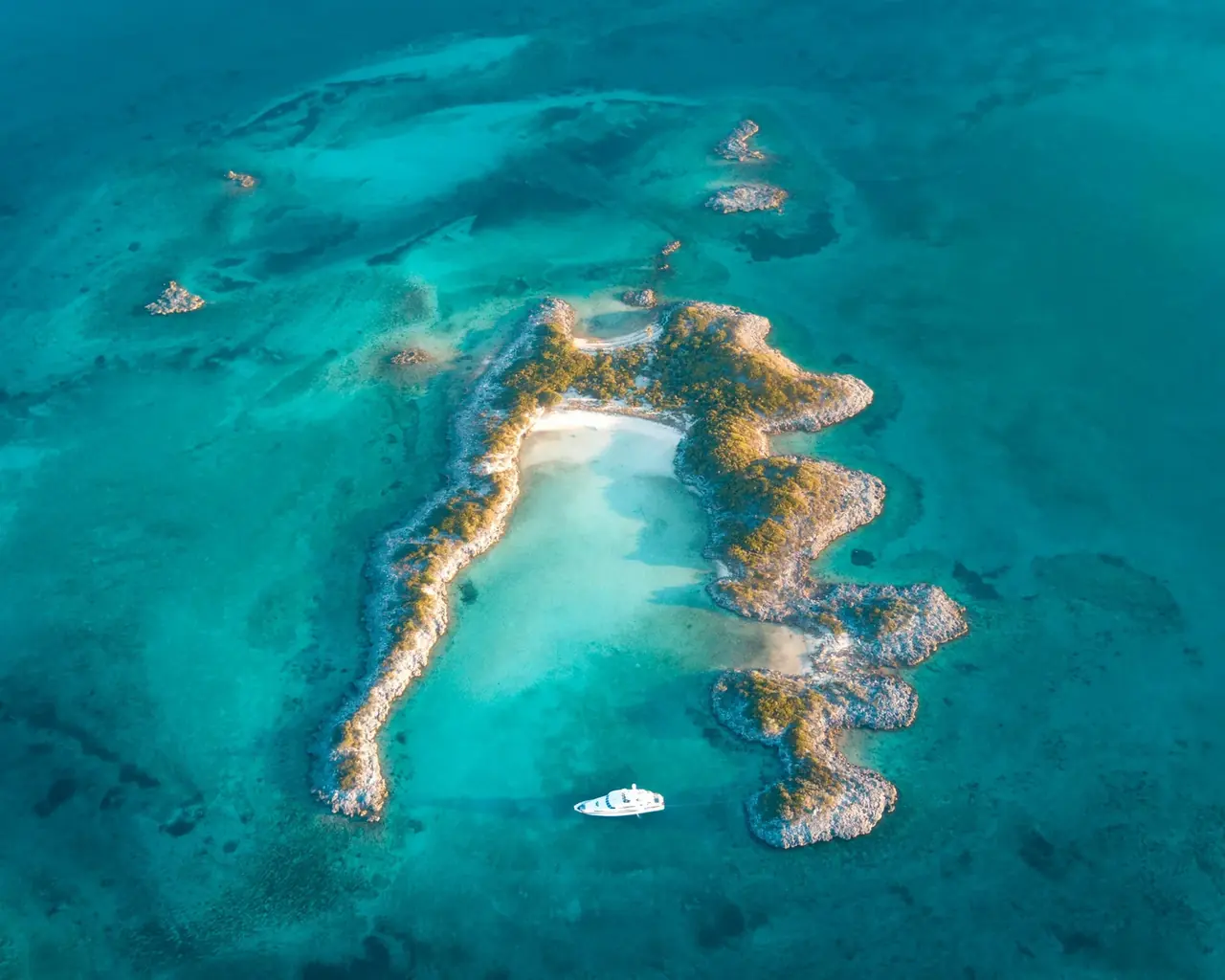
The water and the sandbanks are a major reason guests choose this part of the Bahamas. They are also why the yacht specification matters. Draft, tender access, range, shade, water access and the captain’s local knowledge all shape what is practical. A large yacht is not automatically the right yacht for every shallow-water idea. Ask to see the actual specification and let the route develop around the confirmed yacht.
The best charter brief normally includes the dates, number of guests, cabin requirements, any children or mobility considerations, appetite for watersports and the desired balance between quiet days and shore plans. This gives the captain and charter team room to build a week that feels easy rather than over-filled.
A flexible Exumas route: cays, coves and open water
Many crewed Exumas charters begin from Nassau or from an agreed location based on the yacht’s position. A north-to-south route can make sense, but it should be treated as a framework rather than a promise. Weather, tide, sea state, the yacht’s draft, mooring availability and the group’s energy can all change the best order of stops.
A possible week may include a first night to settle aboard, time around Highbourne Cay or another suitable northern cay, and then a gradual movement south through the Exuma Cays. Compass Cay, Staniel Cay, Big Major Cay and the wider Great Exuma area may all feature in a conversation. Stocking Island can also appeal to guests who enjoy a change of scene near George Town.
The official Bahamas tourism board highlights Compass Cay, Staniel Cay, Big Major Cay and Stocking Island among the locations that help give the Exumas their character.1 Their inclusion in a published guide does not mean they are guaranteed on a particular charter. A captain must confirm the conditions, local operating rules and the safest way to approach each day.
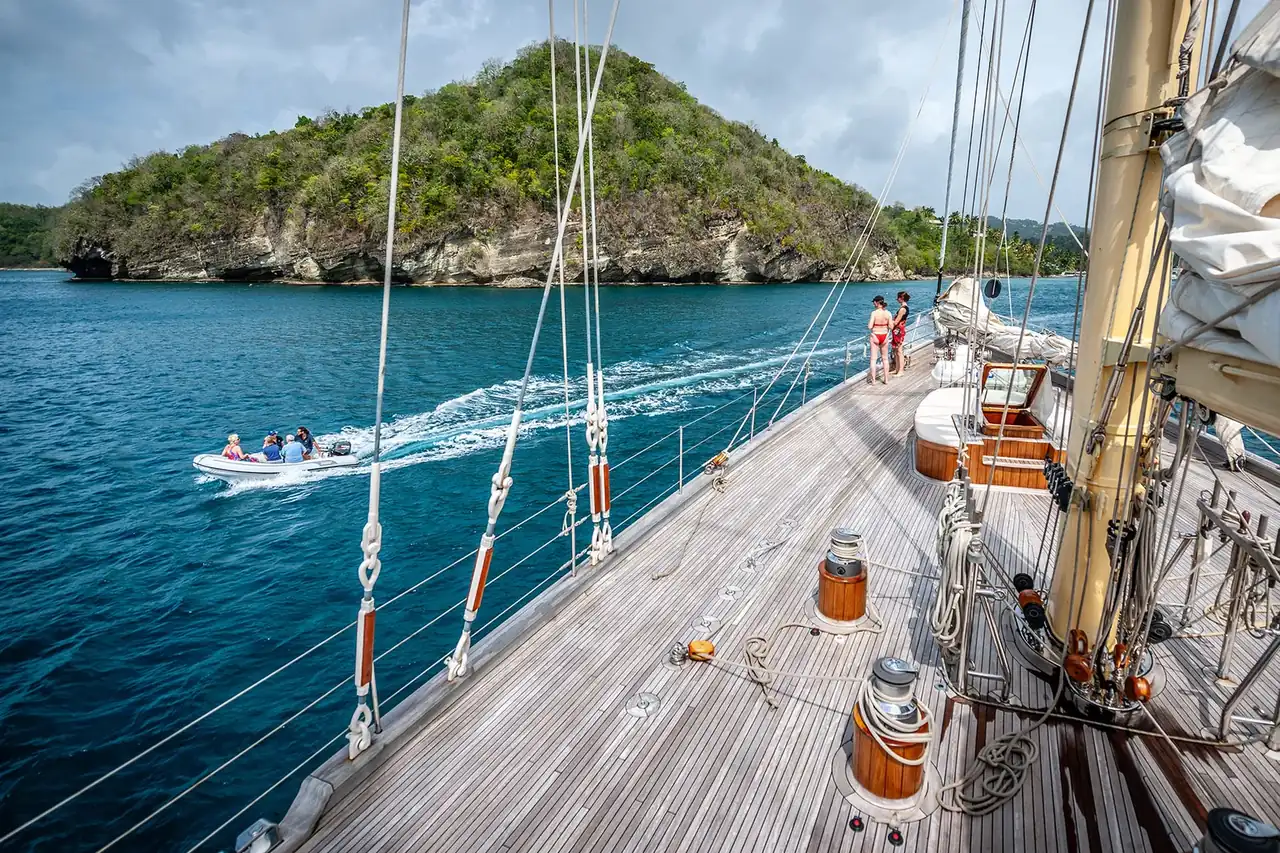
This flexibility is a benefit, not a compromise. The best day could be an early swim, breakfast in a sheltered anchorage, a tender trip before lunch and a quiet afternoon with the water toys. It could also be a longer move to protect the rest of the week from a change in weather. The crew will make those calls with safety, comfort and the route in mind.
If there is a must-do wish, say so early. Perhaps it is time near Staniel Cay, a particular beach, snorkelling, a special meal ashore or simply a day with no schedule. Give the wish a priority level. That helps the captain distinguish what is essential from what can move to another day.
What to see: plan highlights without treating them as promises
The Exumas are known for clear water, beaches, reefs and cays that are best reached by boat. The official destination guide identifies Thunderball Grotto near Staniel Cay, Big Major Cay, Compass Cay and the Exuma Cays Land and Sea Park as well-known parts of the area.1
Thunderball Grotto is a tide-sensitive underwater cave west of Staniel Cay. The tourism authority notes that its entrance is underwater, which is a useful reminder that a visit requires the right conditions, timing and guest confidence in the water.1 It should never be presented as a guaranteed swim or as suitable for every guest.
Big Major Cay is often associated with the swimming pigs. The official tourism site describes it as accessible only by boat from the nearby Staniel Cay area.1 Wildlife encounters should be approached with care and local guidance. The captain or a suitable operator can advise on a respectful visit. Wildlife, weather and local conditions should shape expectations for any encounter.
Compass Cay can be another option for guests interested in a tender excursion and marine life. The exact plan should take account of current local operations, weather, timing and any age or confidence considerations. The same applies to snorkelling and sandbar stops. A photograph cannot tell you whether a site is right for the named yacht or for that morning’s conditions.
For many guests, the most memorable part of the Exumas is less specific. It is the time between the named stops: the water before breakfast, the tender ride into a quiet bay, a long lunch under shade, or a sunset swim from the stern. These are the moments that need the least over-planning.
Exuma Cays Land and Sea Park: responsible cruising matters
The Exuma Cays Land and Sea Park is a protected part of the route, not simply a scenic backdrop. Bahamas National Trust describes it as a 112,640-acre protected area of land and sea and as the first marine reserve of its kind in the wider Caribbean.2
The published park rules are clear. Fishing, conching, shelling, lobstering and removing living or dead material are prohibited within the park. There are also restrictions on anchoring, including in mooring fields and on coral reefs.3 The rules state that visitors should take out everything they bring in because there is no trash disposal service inside the park.3
For guests, this means a more considered experience. The captain handles the navigational and operational detail. The group can help by following the crew briefing, using the tender as directed and avoiding assumptions about fishing, anchoring, collecting shells or setting up on a beach. These are not limitations on the holiday. They are part of what protects the cruising ground.
Park rules, mooring arrangements and fees can change. Check the current Bahamas National Trust guidance close to travel rather than relying on a general planning article. If a park day is important to the group, include it in the charter brief so the captain can assess the options against the confirmed yacht and the route.
When to go and how to plan the week
For many visitors, the main Bahamas cruising period is between November and April. The Moorings identifies November through April as its peak sailing period in the Bahamas, while also noting that local weather and conditions differ between islands and seasons.4 That is helpful context, not a forecast. Cold fronts, wind, swell and conditions around individual cays can affect a week at any time.
The Atlantic hurricane season officially runs from 1 June to 30 November. NOAA notes that tropical cyclone activity can occur outside those dates and that every season is different.5 If you are travelling close to that period, ask for the yacht’s intended position, route alternatives and the relevant cancellation and insurance wording before you commit. The captain’s safety assessment and current forecasts always take priority over a published itinerary.
The clearance process should also be confirmed against the vessel and route. Bahamas Customs distinguishes between private pleasure vessels and vessels used for commercial purposes or charter, which have different requirements.6 A charter guest does not need to become an expert in vessel paperwork. It is still sensible to ask the charter team to confirm the applicable process, documents, permits and any route-specific fees for the named yacht.
Before booking flights, settle the expected embarkation and disembarkation point with the yacht’s current position in mind. Confirm the transfer plan, first-night expectation, redelivery time and any delivery or redelivery implications in writing. A clear start and finish protects the middle of the week.
Choosing the right yacht for the Bahamas
A Bahamas charter is not a generic yacht search. Start with the use of the yacht. Families may prioritise shade, easy water access, cabin proximity, tender seating and child-sized safety equipment. A group of friends may care more about a sociable aft deck, a beach club, watersports and cabins with comparable privacy. A couple may value a quieter layout and a route with more time at anchor.
Ask for the current general arrangement, tender information, draft and water-toy list for each shortlisted yacht. Then ask which parts of the Exumas itinerary are a realistic fit. The answer can vary with the yacht’s draft, range, stabilisers, tender setup, local operating restrictions and the conditions.
The captain has the final authority over navigation and safety. That is why a useful charter proposal describes the yacht and a flexible route rather than selling a fixed map. The combination that matters is simple: the right yacht, the right dates and enough space in the plan for the best day to reveal itself.
Start with a practical Exumas charter brief
A strong first enquiry is short but specific. Include dates, guest numbers, cabin needs, budget range, preferred embarkation area and the parts of the week that matter most. Mention whether the group is drawn to long beach days, snorkelling, dining ashore, fishing subject to local rules, watersports or pure downtime.
Then review live options through the Bahamas yacht charter page and the Caribbean yacht search. The charter team can check the confirmed yacht position, route fit and current commercial detail. Your final itinerary should come from the captain’s plan and the agreement, not a generic list of Instagram locations.
For wider Caribbean route choices, read the Caribbean yacht charter planning guide. If the Exumas sound right for your group, use the Caribbean quote form to begin a yacht-specific conversation.
References
- The Bahamas Ministry of Tourism, The Exumas
- Bahamas National Trust, Exuma Cays Land and Sea Park
- Bahamas National Trust, Exuma Cays Land and Sea Park Rules
- The Moorings, When is the best time to sail the Bahamas
- National Oceanic and Atmospheric Administration, Tropical Cyclone Climatology
- Bahamas Customs, Marine Vessel Declarations and Cruising Permits
Planning a charter?
Tell us your dates and destination. Our charter team will review your brief and prepare a suitable shortlist.